
In short
A screen-and-recoat (also called buff and coat) lightly abrades the existing finish and adds a fresh protective topcoat — no full sanding required. Done every few years, it keeps hardwood floors looking good and delays the need for full refinishing. Mirror Image Wood Flooring also offers cleaning and seasonal inspections.
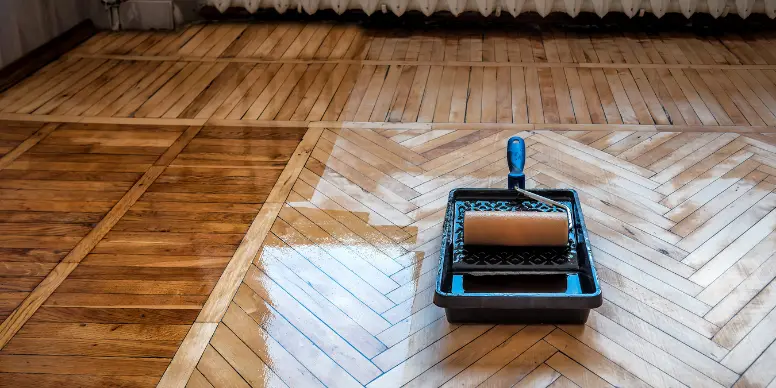
Recoat vs. full refinish
If the finish is dull or lightly scratched but the wear hasn't reached bare wood, a recoat is usually enough — it's faster and costs less than full sanding and refinishing. Once gray, worn wood is showing through, the floor needs a full refinish.
Simple hardwood care tips
- Use felt pads under furniture legs and chairs
- Sweep or vacuum grit regularly — sand acts like sandpaper
- Clean with a product made for your finish; avoid steam mops and excess water
- Use mats at entries, especially during Maine winters when salt and sand get tracked in
- Keep indoor humidity steady to limit gaps and cupping
Maintenance & Care: common questions
How often should hardwood floors be recoated?
Many households benefit from a recoat every three to five years, depending on foot traffic, pets and how the floor is cared for. Recoating before the finish wears through avoids the cost of a full refinish.
Does winter salt damage hardwood floors?
Road salt and sand tracked in during Maine winters scratch and dull the finish. Entry mats, regular sweeping and timely recoating help protect the floor.